Free PDF Total Recovery: Breaking the Cycle of Chronic Pain and Depression, by Gary Kaplan Donna Beech
Subsequent just what we will certainly provide in this write-up regarding Total Recovery: Breaking The Cycle Of Chronic Pain And Depression, By Gary Kaplan Donna Beech You recognize truly that this book is coming as the very best vendor book today. So, when you are really a good reader or you're followers of the writer, it does will be funny if you don't have this publication. It indicates that you have to get this publication. For you who are beginning to learn about something new and also really feel curious concerning this book, it's very easy after that. Simply get this book and also really feel how this book will certainly give you extra exciting lessons.
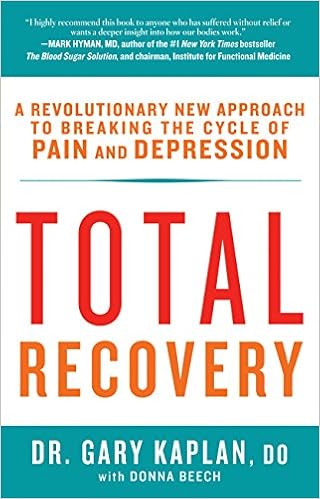
Total Recovery: Breaking the Cycle of Chronic Pain and Depression, by Gary Kaplan Donna Beech

Free PDF Total Recovery: Breaking the Cycle of Chronic Pain and Depression, by Gary Kaplan Donna Beech
Locate the secret to boost the quality of life by reading this Total Recovery: Breaking The Cycle Of Chronic Pain And Depression, By Gary Kaplan Donna Beech This is a type of publication that you require now. Besides, it can be your preferred book to review after having this book Total Recovery: Breaking The Cycle Of Chronic Pain And Depression, By Gary Kaplan Donna Beech Do you ask why? Well, Total Recovery: Breaking The Cycle Of Chronic Pain And Depression, By Gary Kaplan Donna Beech is a publication that has various characteristic with others. You could not should understand which the writer is, exactly how popular the job is. As smart word, never judge the words from that speaks, but make the words as your good value to your life.
This book is very appropriate for the book motif that you are seeking now. Several resources could supply the option, yet Total Recovery: Breaking The Cycle Of Chronic Pain And Depression, By Gary Kaplan Donna Beech can be the most effective way. It is not just one point that you can appreciate. Much more points as well as lessons are given or you to cover just what you exactly require. Several viewers should read the books additionally because of the specific factors. Some may love to read it a lot but some might require it since the work due date.
Even there are numerous books to pick; you might really feel so difficult to select which one that is very proper for you. Nevertheless, when you still really feel baffled, take the Total Recovery: Breaking The Cycle Of Chronic Pain And Depression, By Gary Kaplan Donna Beech as your reference to read now. The soft documents will certainly worry about the very same points with the print documents. We offer this publication is just for you who intend to attempt analysis. Even you have no analysis practice; it can be starter way to like analysis.
You can carefully add the soft data Total Recovery: Breaking The Cycle Of Chronic Pain And Depression, By Gary Kaplan Donna Beech to the device or every computer unit in your workplace or home. It will certainly assist you to consistently proceed checking out Total Recovery: Breaking The Cycle Of Chronic Pain And Depression, By Gary Kaplan Donna Beech whenever you have extra time. This is why, reading this Total Recovery: Breaking The Cycle Of Chronic Pain And Depression, By Gary Kaplan Donna Beech doesn't provide you troubles. It will provide you essential sources for you that wish to start writing, writing about the comparable publication Total Recovery: Breaking The Cycle Of Chronic Pain And Depression, By Gary Kaplan Donna Beech are different book industry.
Why can't I get better?Did my doctors miss something?How can I recover? According to Dr. Gary Kaplan, conventional thinking about the nature of chronic pain and depression is essentially flawed. Although physicians continue to diagnose conditions like migraines, fibromyalgia, chronic fatigue, chronic back pain, depression, anxiety, and PTSD, a growing body of research shows that these are in fact symptoms of something else—a deep-rooted inflammation in the brain. This inflammation can affect the nervous system for months-even years-to devastating effect.In Total Recovery, Dr. Kaplan demonstrates that it is possible to quiet the inflammatory state at the root of chronic pain and depression, and lays out a revolutionary new medical approach to ending your suffering and reclaiming your health.
Your recently viewed items and featured recommendations
›
View or edit your browsing history
After viewing product detail pages, look here to find an easy way to navigate back to pages you are interested in.
Product details
Paperback: 272 pages
Publisher: Rodale Books; Reprint edition (May 19, 2015)
Language: English
ISBN-10: 1623365619
ISBN-13: 978-1623365615
Product Dimensions:
5.6 x 0.7 x 8.7 inches
Shipping Weight: 12 ounces (View shipping rates and policies)
Average Customer Review:
4.6 out of 5 stars
95 customer reviews
Amazon Best Sellers Rank:
#727,699 in Books (See Top 100 in Books)
Great information about the research about glial cells, but felt a little bit like just an advertisement for his private practice that doesn’t accept any insurance and normal people can’t afford. I was hoping for more self-help type information, supplement/diet recommendation, or even a sort of “scripting†guide to talk to your own doctor to make this information apply to my own healthcare plan. It’s a good pep talk at being optimistic about the future of where actual patient-centered medicine could go, but for those dealing with complex or chronic issues not a lot of actual solutions. For educational information about the nature of inflammation it’s an interesting read.
This is one of the best "health books" I have ever read. I have never highlighted a book so much. I did purchase the kindle version, but I would recommend purchasing the book. I found myself wanting to refer back to areas I had already read. In addition, the end of the book Dr. Kaplan lists good reference information.As someone who has been diagnosed with an autoimmune disease and feels like my immune system fails me - I felt as if Dr. Kaplan wrote this book for me. Dr. Kaplan combines western and eastern forms of medical practice. Rather than continue to prescribe meds to treat the symptoms, he was determined to get to the root of the cause.I have always believed inflammation was a definite problem of many of my medical issues and after reading this book, Dr. Kaplan confirmed this. Since reading the book, I have searched the National Holistic Medical Assoc to find a health care provider in my area that can address my needs much like Dr. Kaplan. I will also know what questions to ask thanks to Dr. Kaplan.If there is anyone who suffers from depression, chronic pain and/or an autoimmune illness - I would highly recommend reading this. This book brought tears to my eyes as I felt Dr. Kaplan wrote this book specifically for me - that he had me in mind! I have never read a book that has made me feel this way. I have had chronic pain for 8 yrs and I feel this book gave me a place to start.
I help with a support group for people with Peripheral Neuropathy (PN). Most people with PN must cope with "chronic pain signals" as the neuropathy slowly degrades and kills the neurons (“nervesâ€) in our legs and arms. But only a minority (estimates seem to vary between 20% and 30%) point to "chronic pain" as a significant part of PN's impact. I am not a member of that minority, but I have been working for months to gather information to help those who are. I hope to help them (and myself) understand the relevant science. As a part of that research I have been engaged in a layman’s deep dive.It’s a puzzle. Why is “pain†such a huge issue for some and not for others? Is the disease process killing our nerves fundamentally different for those with significant pain, causing a far higher volume of “pain signalsâ€? That cannot be ruled out, but supporting evidence seems scarce. (Research results about peripheral neuropathy are generally sparse, given its neglected status in our nation’s research budgets.) An alternative: are the pain signals from PN the same for everyone, but something else is different?I wrote a blog post for our support group’s web site (dcpnsuport.org) confessing my lack of understanding of “chronic painâ€. A year later, several months ago, I attended a (somewhat technical) presentation on Dr. Kaplan’s thesis and then viewed his YouTube version of that same presentation (also a bit technical). I was quite impressed but must confess to being startled and puzzled by the phrase “brain inflammationâ€. Doesn’t the “blood brain barrier†protect the brain from the body’s blood & immune system and hence protect it from “inflammationâ€? As an exercise in trying to resolve this confusion I wrote another long blog post trying to turn his thesis into simpler words. Ok, but it didn’t resolve my “blood-brain barrier†question. I have kept digging (including reading Kaplan’s Total Recovery book several times) and here’s what I have found:1. Inflammation, part of the body’s mechanism to recover, is inherently destructive. It has to be, as it is activated to clear away material in order to give access to the cells for needed repair materials. Sort of how a fireman might chop a hole in an undamaged roof to fight a fire elsewhere in a house.2. "Pain signals" (chronic or not) are not "pain". "Pain" is a process in the brain that lets us “feel†in order to take actions. In real time, the brain interprets “pain signals†and MAY make us “feel pain†and MAY make us do something. May? Sure. Hasn’t everyone stopped after a period of activity and looked down to discover a cut or scrape that was totally unnoticed when it occurred? Is a chronic stream of pain signals different? Not necessarily. In a July 1970 article in Scientific American, Nobel winner Eric Kandel described the physical changes that take place in a small animal’s nervous system when it “learns†to ignore a harmless “pain signalâ€. Much subsequent research has expanded on this. Humans can “get used to†pain signals. As I compose this review, the PN-induced pain from my toes is being effectively dealt with by my focus on the distractions and joys of writing. Handling the pain “in the background†no doubt takes a toll, but “doing something†makes it better for me. I’m fortunate that such a simple ploy works so well. Other are not so fortunate – why? Kaplan suggests a reason.3. Kaplan proposes an environment where multiple sources of pain signals (including in-brain sources such as childhood trauma and depression and body sources such as infection or environmental toxins) can stimulate immune responses, including inflammation, elsewhere in the body. He proposes that these simultaneous insults work to reverse progress in one area as long as the other bad processes continue. This requires a communication mechanism to support such interaction. Kaplan does not identify such a mechanism but says a clinical diagnostic process that looks to identify ALL disease sources is needed to make lasting progress. He further proposes that as the body is exposed to longer or increased negative activity it becomes ever more reactive to body or brain problems, triggering inflammation more quickly. He gives clinical evidence for this increase in reactivity but doesn’t identify a mechanism.4. The “blood brain barrier†is a misnomer – it’s more a “blood-brain editorâ€. It selectively enforces some, but not blanket, restrictions on the movement of materials. Within this restriction, as described in an August 2018 Scientific American article (“The Seventh Sense†by Jonathan Kipnis), the brain is a full partner with the body’s immune system. Newly discovered lymph mechanisms in the brain carry debris from the brain directly to the body’s immune system to spark immune response. Working in the other direction, immune products (such as antibodies) created by the immune system are carried directly into the brain to control its somewhat unique immune processes – explicitly including “inflammationâ€. Our body thus has a Seventh Sense, a Sense of Health, that it uses to direct resources. This Seventh Sense closely matches Kaplan’s proposed mechanism for full-body disease interaction.5. Finally, 2016 research using MRI ban scans by a leading diabetes researcher, Dr. Solomon Tesfaye, describes distinctive brain changes (damage?) found in diabetic PN patients who report significant pain. This suggests, to me, that many of these “painful†patients may have other serious issues (as described by Kaplan). If so, perhaps, as a form of defense, the body has reacted by physically changing (as described by Eric Kandel). Perhaps such changes are related to the “increased reactivity†Kaplan describes.It is true that some of the book’s material praises his clinic’s approach to clinical care. That’s OK. I just wish I could redirect to a practice like his some of the money used by my “normal†diagnostics-lite, specialist-favored, treatment-only insurance benefits. Unfortunately, given modern American insurance payment structures, I’m afraid the Kaplans of this country are outside my (and my fellow support group members) pay grade.
As another reviewer mentioned, this was not a how to book but a "Look how many degrees I have and how many cool people I have met" book. the author does a good job of covering the statistics regarding health care and disease in this country over and over again, redundantly, ad nauseum, but fails completely when it comes to the How Too part of the book.What he suggests has been recommended in thousands of magazine articles.
Total Recovery does a very throough job of connecting childhood trauma and stresses to diseases and disabilities that show up decades later. One of the most important chapters offers suggestions on day to day practices, including nutrtitional supplements, exercise and meditation, that can help to reverse the inflammation related to debilitating diseases and depression. The author highly encourages the reader to work with and find the right doctor as a partner in healing, so this is not a do-it-yourself book but an excellent explanation of the connection between emotional trauma and disease and the steps the reader can take day after day to eradicate their effects.
This is one of the best books on chronic pain and how it works that I have ever read. I seldom leave reviews, but this is a must read for those with chronic pain. I have had fibromyalgia for over 20 years and it have helped me understand the issues of trying to figure out what causes chronic pain. The idea of a cumulative "hit" explained my life very well and is one of the few sane answers as to why some people just do not get better after a health crisis. I better understand the complex issues of pain meds and the pain cycle and have actually decided to try some new fibro meds after some scary side effects 10 years ago from a few.
Total Recovery: Breaking the Cycle of Chronic Pain and Depression, by Gary Kaplan Donna Beech PDF
Total Recovery: Breaking the Cycle of Chronic Pain and Depression, by Gary Kaplan Donna Beech EPub
Total Recovery: Breaking the Cycle of Chronic Pain and Depression, by Gary Kaplan Donna Beech Doc
Total Recovery: Breaking the Cycle of Chronic Pain and Depression, by Gary Kaplan Donna Beech iBooks
Total Recovery: Breaking the Cycle of Chronic Pain and Depression, by Gary Kaplan Donna Beech rtf
Total Recovery: Breaking the Cycle of Chronic Pain and Depression, by Gary Kaplan Donna Beech Mobipocket
Total Recovery: Breaking the Cycle of Chronic Pain and Depression, by Gary Kaplan Donna Beech Kindle